ReverseMortgageHamilton.ca explains how to pay for home renovations for seniors in Hamilton, starting with the help the City and the federal government offer. Hamilton’s houses are old. The 2021 Census counted 32.8% of the city’s homes as built in 1960 or earlier (Statistics Canada, Census Profile 2021).
Older homes bring steep staircases, bathtubs that are hard to step into, original wiring and roofs near the end of their life. Fixing them is often what lets you stay in your home for years longer.
Start with the City and government help
Programs come first because some of the money never has to be paid back. Check each one before you borrow.
Ontario Renovates, from the City of Hamilton
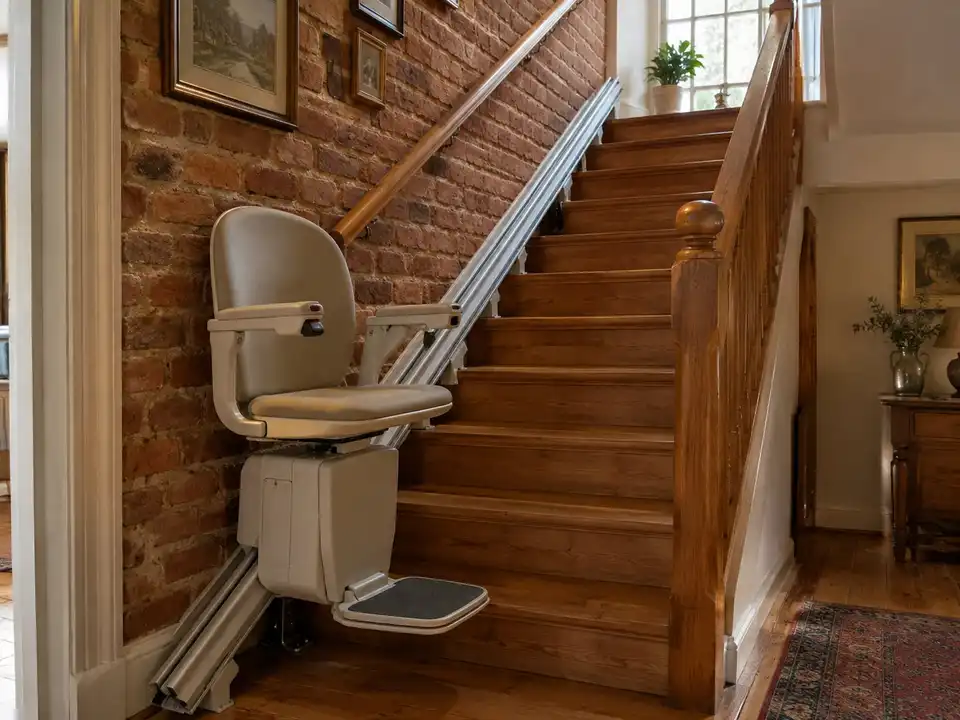
The City’s Ontario Renovates program offers a forgivable loan of up to $25,000, with no interest and no payments (City of Hamilton, Ontario Renovates Programs). The loan is forgiven after 10 years if you stay in the home. It covers repairs such as structural, electrical, plumbing and heating work, and accessibility changes like ramps, handrails, chair lifts and bath lifts.
The limits are strict. Household income has to be at or below $60,000, and the home’s assessed value at or below $300,000. The City says demand can often exceed the money available, so ask whether it’s taking applications before you plan around it.
The federal Home Accessibility Tax Credit
The Home Accessibility Tax Credit covers up to $20,000 of eligible expenses a year for work that makes a home safer or easier to use for someone 65 or older, or someone eligible for the disability tax credit (Canada Revenue Agency, line 31285).
The credit is worth the lowest federal tax rate on those expenses. That rate is 14% for 2026 (Department of Finance Canada), so $20,000 of work can bring back up to $2,800. It lowers tax you owe, so it helps most if you pay income tax.
Ontario’s old Healthy Homes Renovation Tax Credit has ended. It doesn’t apply to 2017 or later tax years (Canada Revenue Agency, Ontario 2017).
A City grant to add a unit for family or a caregiver
The City of Hamilton pays a grant of 70% of eligible costs, up to $40,000 per unit, for adding a basement unit, a backyard unit or a garden suite (City of Hamilton, ADU and Multi-Plex Housing Incentive Program). The unit must get its occupancy permit within 18 months of the City’s conditional approval to the program, or by August 4, 2027, whichever comes first.
A unit like this can let a son, daughter or caregiver live close by while you keep your own space. The property has to sit inside the program’s eligible area, so confirm that with the City first.
How a reverse mortgage pays for the rest
Owners aged 55 and up can use a reverse mortgage to borrow against the house, with no required monthly mortgage payments. Property taxes, home insurance and upkeep stay yours to pay.
The amount is what’s left after what you owe
The ceiling is not extra money on top of your current mortgage. Whatever is still owing gets cleared first from that same money.
For example, take an illustrative homeowner aged 72 on Hamilton Mountain. The board’s 12-month average sale price there was $684,102 to September 2026 (Cornerstone Association of REALTORS). At 72, the ceiling is about 54.8% of the value, or up to about $375,000. With $60,000 still owing on the home, up to about $315,000 would be left for renovations and anything else. The Hamilton reverse mortgage calculator runs the same numbers for your own home.
Take the money in stages
You don’t have to take the full amount. A renovation is often paid in parts: a deposit, then payments as the work is done. Lenders typically ask for a first amount of roughly $20,000 to $25,000, and later amounts can follow when you need them. Interest is charged only on money you actually take.
Home condition is part of approval
The appraiser looks at the home’s condition as well as its value. A booked repair, such as a new roof, can sometimes be built in, with part of the money held back until the work is done. A home in serious disrepair may need the repair first, before a reverse mortgage can be arranged.
Keep every receipt
Keep invoices, permits and receipts in one folder. You need them to claim the tax credit, and they’re a record of what was done to the home.
What it costs, and what stays protected
Advertised 5-year fixed rates for reverse mortgages ran 6.23% to 6.94% when checked on September 17, 2026. The balance grows with interest, yet a rising house price often makes up part or all of that. Across Canada, borrowers keep roughly half of their home’s value on average.
When the mortgage becomes due, you can never owe more than your home is worth, provided the property taxes are paid, the house stays insured and repairs are kept up. It’s typically called the no negative equity guarantee. It comes with all four government regulated lenders, along with required independent legal advice: HomeEquity Bank (CHIP), Equitable Bank, Home Trust and Bloom. The full list of one-time costs is in the guide to what a reverse mortgage costs in Hamilton.
Other ways to pay, and when each fits
A HELOC (home equity line of credit) can cost less in interest, but it needs income that passes a bank’s test and monthly payments. Savings suit smaller jobs. If your income is low, the Hamilton property tax deferral for seniors can free up cash each year. Some families weigh a move instead, and the guide to the cost of downsizing in Hamilton lists those costs.
Richard Hopkins, Mortgage Broker, compares every reverse mortgage lender in Canada and arranges HELOCs and regular mortgages too, so the answer can be “a reverse mortgage isn’t the right fit.” The service is free to you: the lender you choose pays the brokerage after the mortgage funds, and all four pay the same. Richard works by email, phone and video call, and a son or daughter can follow along in copy. If care at home is part of the plan too, read about paying for home care in Hamilton.
What's included when you ask for help
- Checks the City and government programs you may qualify for first
- Works out how much of your home's value is available after what you owe
- Compares every reverse mortgage lender in Canada for your home
- Explains how a booked repair or a home in poor repair affects approval
- Sets up the money as one amount or in stages, as the work needs it
- Sends your options and the recommendation in writing, by email
- Copies your son or daughter on every email if you want
- Lists every one-time cost before you sign anything
How the options compare
| What changes | Who it fits | Monthly payments | Main limit |
|---|---|---|---|
| Savings | Smaller jobs you can cover in cash | None | Draws down money you may need later |
| HELOC (home equity line of credit) | Steady income that passes a bank's test | Yes, at least the interest | Income-tested; the bank can reduce or freeze it |
| Reverse mortgage | Homeowners 55+ who want to stay | No required mortgage payments | Up to about 46% to 60% of the value, less what you owe |
| City Ontario Renovates loan | Income $60,000 or less, assessed value $300,000 or less | None, forgiven after 10 years | Up to $25,000; demand can exceed funding |
| Home Accessibility Tax Credit | Age 65+, or eligible for the disability tax credit | None | Up to $2,800 back on $20,000 of work |
Related Hamilton guides
- What does a reverse mortgage cost in Hamilton?
- How does Hamilton's property tax deferral for seniors work?
- What does downsizing in Hamilton really cost?
Sources
Figures checked October 15, 2026.
- Statistics Canada, Census Profile 2021, City of Hamilton
- City of Hamilton, Ontario Renovates Programs
- City of Hamilton, Additional Dwelling Unit and Multi-Plex Housing Incentive Program
- Canada Revenue Agency, Line 31285: Home accessibility expenses
- Department of Finance Canada, Reducing the lowest marginal personal income tax rate
- Canada Revenue Agency, Information for residents of Ontario (2017)
- Cornerstone Association of REALTORS, Hamilton housing statistics